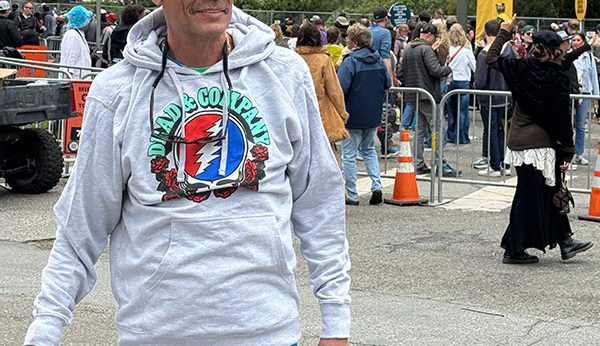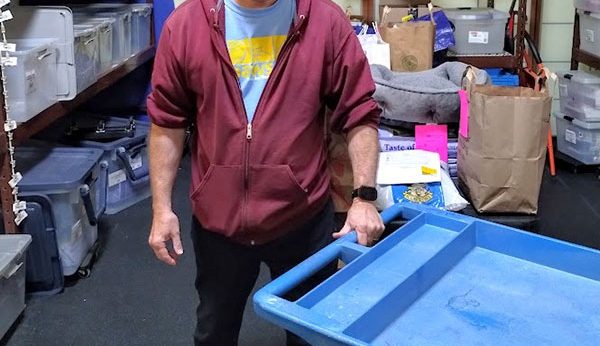
John Emmons, former Shanti Project Volunteer
When Shanti Project volunteer John Emmons moved from Denver to San Francisco in 1985, he wasn’t running toward a city — he was answering a calling.
At the time, the AIDS epidemic felt distant in Denver. The crisis was happening, but from where John stood, much of its reality remained unseen. He knew, however, that something in him was pulling him toward service — specifically, toward those who were dying. He didn’t yet know why. He only knew he needed to listen to that instinct.
That calling led him to Shanti.
Through Shanti’s volunteer training program — now known as the Peer Support Volunteer Trainings — John learned what would become the foundation of his service: how to listen without trying to fix, how to sit with uncertainty, and how simply being present can become its own form of care.
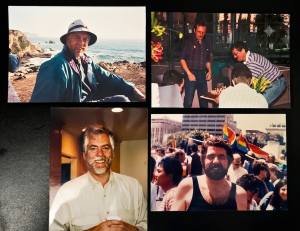
In 1986, John was paired with two Shanti clients, Joe and Charles, both in the early stages of HIV. Over time, those relationships became much more than volunteer assignments. John was welcomed into their social circles, their friendships, and their everyday lives. He became part of the community that held one another together during years when loss was constant and often unspoken.
One memory from the late 1980s remains especially vivid.
John remembers attending Pride with Joe, surrounded by celebration — music, crowds, joy, and a city alive with color. To John, it felt like what Pride was meant to be: a celebration of life, identity, and community. But for Joe, the day carried something different. Amid the celebration, he was reflecting on the reality of living with AIDS and the uncertainty of what his future might hold.
That moment stayed with John. It captured the contrast so many were living at the time: public celebration alongside private reflection, joy existing beside fear, and a community finding ways to hold both at once.
As he became more immersed in the city and in Shanti’s work, John witnessed firsthand how communities showed up for one another during the height of the epidemic. He speaks especially about the profound role lesbian women played — caring for friends, partners, and strangers when many others stepped away. It was an act of collective compassion that shaped his understanding of what community truly means.
Joe died March of 1990. Charles died a year later.
Their deaths marked profound losses, but John says what stayed with him was not only grief — it was what those relationships taught him. Before moving to San Francisco, he had been shielded from death. He had not seen how dying affects the people around someone, how grief ripples through friendships, families, and chosen families. Through Joe and Charles, he came to understand death not as an ending to avoid, but as part of what makes human connection matter.
For John, one of the most powerful parts of being a Shanti volunteer in the 1980s and 1990s was the spiritual connection that came from simply being with someone in their hardest moments. In showing up for others, he discovered something unexpected: a deeper connection to himself — his purpose, his faith in community, and his understanding of what gives life meaning.
Nearly four decades later, John’s story reminds us that Pride is not only celebration. It is memory. It is loss. It is resilience. And it is the people who chose to love and stay present when it mattered most.